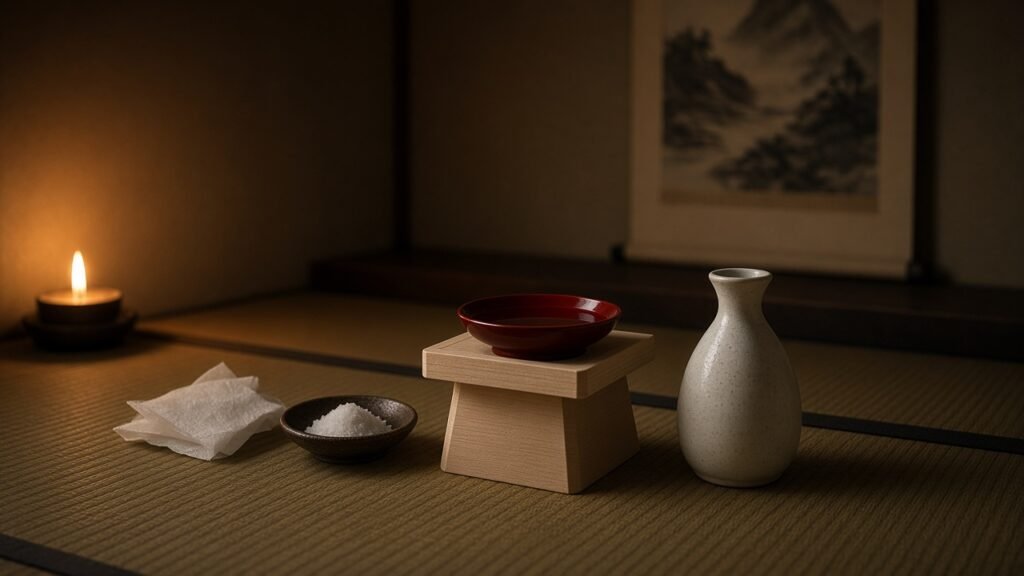
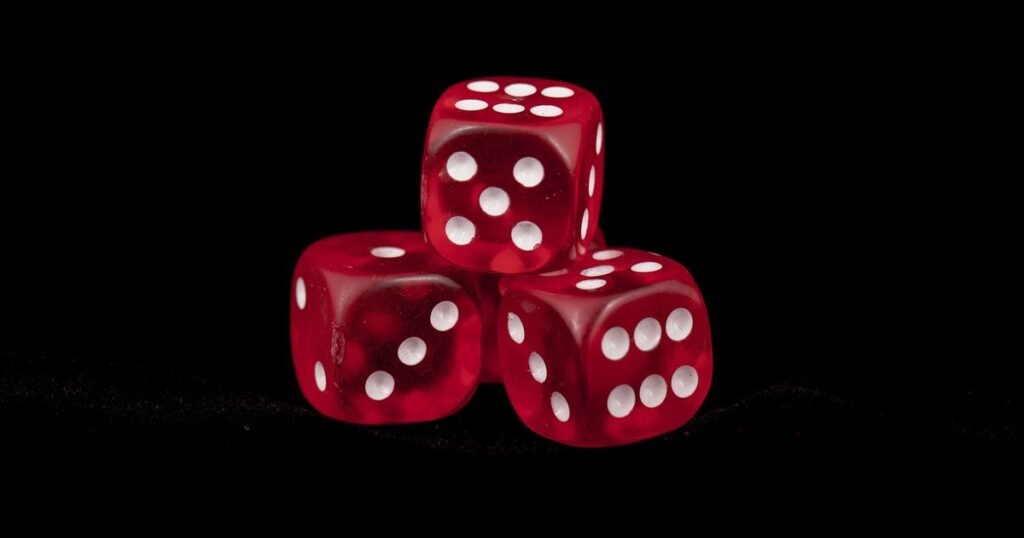
If you have watched a samurai drama or a classic yakuza film, you have probably seen the scene: a dealer with one shoulder bared drops two dice into a bamboo cup, slams it face-down on a white mat and calls out to the room, “Place your bets!” This is Cho-Han (丁半), the traditional Japanese dice game that sat at the heart of Edo-period gambling dens. The rules take ten seconds to learn, yet the game carries centuries of history, a whole cast of gambling-den roles, and a surprising number of words that Japanese people still use every day. This guide explains how Cho-Han works, the real odds, how the old gambling dens were run, and where the game shows up in films and video games today.
Note: outside of state-licensed betting such as horse and boat racing, gambling for money is illegal in Japan. This article is about history and culture.
What Is Cho-Han?
Cho-Han is a betting game played with two six-sided dice. Players bet on whether the total of the two dice will be even or odd. An even total is cho (丁) and an odd total is han (半). Once the bets are placed, the cup is lifted and whoever guessed correctly wins.
The names themselves describe the game. Cho carries the sense of something that comes in a matched pair, which fits a number that divides cleanly by two. Han means “half” or “an odd one out”, which suits a number that leaves a remainder.
How to Play Cho-Han, Step by Step
1. The dealer shakes the dice
The dealer, called the tsubofuri (壺振り, “cup shaker”), places two dice in a small woven cup and turns it over onto the playing mat. Traditionally the dealer sat with one shoulder or the whole upper body bare, partly to show that nothing was hidden in the sleeves.
2. Players bet on cho or han
A floor manager known as the nakabon (中盆) invites bets with the famous call “Hatta, hatta!” Players call out cho or han and set their stakes in front of them. In the classic style the round could not begin until the money on both sides was balanced, at which point the nakabon announced that cho and han were even.
3. The reveal
On the call of “Shobu!” (“Contest!”) the cup is lifted. The result is read out, for example “three-five, cho” or “four-one, han”, and the winners are paid.
4. The house takes its cut
The house took a commission, called terasen (寺銭, literally “temple money”), from the winnings. The name is usually traced to the Edo period, when temples and shrines fell outside the city magistrates’ jurisdiction, so gambling dens were often run in temple back rooms.
Cho-Han Odds: Is It Really 50/50?
Yes. Two dice can land in 6 × 6 = 36 equally likely combinations. Exactly 18 of them give an even total and 18 give an odd total, so each side has a 50% chance.
- Cho (even): totals of 2, 4, 6, 8, 10 or 12, which make 18 combinations
- Han (odd): totals of 3, 5, 7, 9 or 11, which make 18 combinations
With fair dice, neither side has an edge. The house made its money purely through the terasen commission, the same principle that keeps every modern casino profitable. Doubles always come out cho, and a pair of ones, called pinzoro, was treated as a special roll in many dens.
Inside an Edo Gambling Den
From the Edo period into the twentieth century, Cho-Han dens were run by the bakuto, professional gamblers who are considered one of the two historical roots of the yakuza. You can read more about them in our guide to the bakuto and tekiya origins of the yakuza.
Key roles
- Kashimoto or domoto (貸元・胴元): the boss who hosted the den, put up the money and collected the terasen.
- Nakabon (中盆): the floor manager who ran the betting and balanced the two sides.
- Tsubofuri (壺振り): the dice dealer, a role that demanded skill, nerve and a reputation for honesty.
- Sanshita (三下): junior members who kept watch and ran errands.
Etiquette mattered. A gambler visiting another family’s den was expected to introduce himself with a formal greeting, a custom explained in our article on jingi wo kiru, the traditional gamblers’ greeting.
Cheating and den rules
A game this simple invited cheating. Stories tell of weighted dice and dealers skilled enough to control the roll inside the cup. A dealer caught cheating faced harsh punishment, because a den that lost its reputation for fairness lost its customers.
A Short History of Cho-Han
Dice gambling in Japan goes back a long way. As early as the Nara and Heian periods, the court repeatedly banned gambling on sugoroku, a board game played with dice. Gambling stayed popular among both warriors and commoners through the medieval era, and by the Edo period Cho-Han had become the signature game of the bakuto dens.
The Tokugawa shogunate outlawed gambling again and again, yet dens kept operating in post towns, ports and at village festivals. Some of the bosses who ran them later became folk heroes in storytelling and ballads. Gambling stayed illegal after the Meiji Restoration, and today it is punished under Articles 185 and 186 of Japan’s Penal Code.
Card gambling had its own culture too. Learn how the flower-card game works in our guide to hanafuda and koi-koi.
Everyday Japanese Words Linked to Gambling
Several common Japanese words are said to come from the world of dice and cards, though most etymologies have competing theories:
- Hanpa (半端): “incomplete” or “half-baked”, built on the same han as an odd number.
- Pin kara kiri made: “from top to bottom”. Pin, meaning one, is thought to come from the Portuguese pinta (dot).
- Ichi ka bachi ka (一か八か): “all or nothing”. One theory says it comes from the top strokes of the characters 丁 and 半, which look like 一 and 八.
- Yakuza: commonly traced to the losing hand 8-9-3 (ya-ku-za) in the card game oicho-kabu, meaning “worthless”.
- Domoto and terasen: still used today for “organizer” and “commission”.
Cho-Han in Film and Games
The dice den is a staple of Toei’s ninkyo chivalry films and of period dramas. Junko Fuji’s role as the gambler Oryu in the Red Peony Gambler (Hibotan Bakuto) series made the cool, composed dice dealer an icon. More recently, the Yakuza / Like a Dragon video game series has included Cho-Han as a minigame, introducing the old gambling-den ritual to players around the world.
Frequently Asked Questions
Is cho even or odd?
Cho means even and han means odd, based on the total of the two dice.
What are the odds in Cho-Han?
Exactly 50/50 with fair dice: 18 of the 36 combinations are even and 18 are odd. The house commission is what gives the den its edge.
Is Cho-Han legal in Japan?
Not for money. Gambling for cash or valuables is illegal under the Penal Code. Playing for fun with no stakes, or in a video game, is fine.
What is a tsubofuri?
The dealer who shakes the dice in the cup. The job required skill, composure and a trusted reputation.
Why is the house cut called “temple money”?
In the Edo period, temples were outside the city magistrates’ jurisdiction, so dens were often held on temple grounds, and the fee paid for the space came to be called terasen.
Conclusion
Cho-Han looks like the simplest game imaginable, just even or odd, but its cup-and-mat ritual, its cast of dealers and floor managers, and its house commission made it the defining game of Japan’s old bakuto dens. Echoes of it survive in everyday Japanese words and in the films and games that keep the gambling-den scene alive. Further reading: Chō-han on Wikipedia.