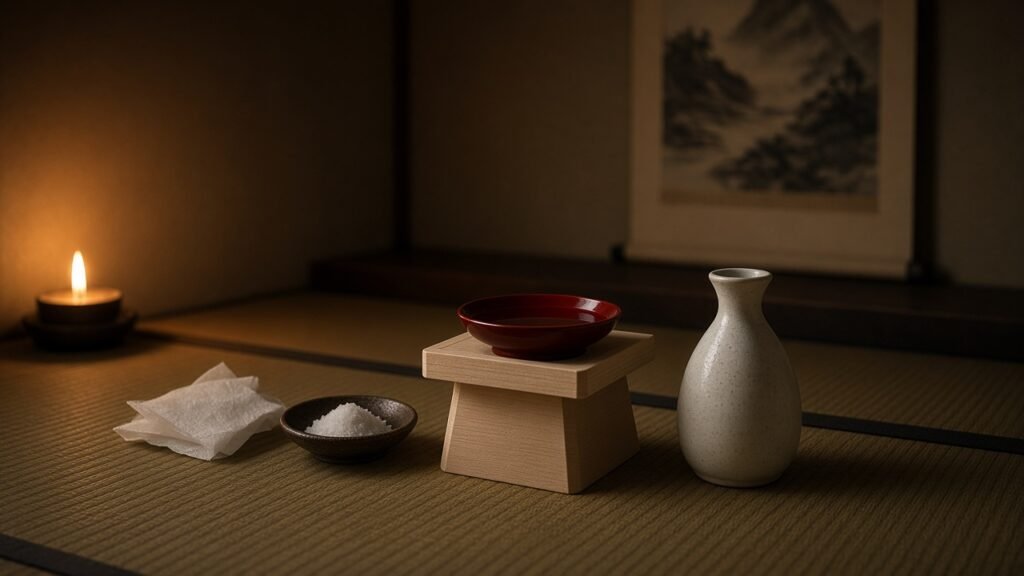
If you have watched classic yakuza films, you have probably seen the scene: men in formal kimono kneel facing each other, a plain wooden stand holds a small sake cup, and the cup is drained in silence. This is the sakazuki ceremony, or sakazukigoto. A single cup of sake may seem like a small thing, so why does it stand for a bond as strong as “father and son” or “brothers”? In this guide we explain what the sakazuki ceremony means, where it comes from, the different types of cups, how the ritual is usually portrayed, and what expressions like “returning the cup,” hamon and zetsuen mean.
Note: this article is about Japanese history, culture and film. It does not endorse or promote organised crime.
What Is the Sakazuki Ceremony?
The sakazuki ceremony is a ritual in which people create a special relationship by sharing sake from ceremonial cups. In the world of the ninkyo (chivalrous outlaw) tradition, it is said to be held when someone formally joins a group, when two people become sworn brothers, or when two groups form an alliance.
Because the bond is created by the cup rather than by blood, the ceremony produces a kind of fictive family: a boss (oyabun) and his “children” (kobun), or elder and younger “brothers.” That is why the sakazuki cup is treated not as simple tableware but as a symbol of the relationship itself.
Why Sake and a Cup?
In Japan, sharing the same sake has long been a sign of unity and a sealed promise. At Shinto festivals, people drink the sake offered to the gods together in a practice called naorai, and at traditional weddings the couple exchange cups in the san-san-kudo ritual. Drinking the same sake from the same vessel expresses becoming one in heart. The sakazuki ceremony is widely seen as an extension of this older Japanese ritual culture.
Origins and History of the Sakazuki
Rituals like the sakazuki spread through the gambler (bakuto) and street-peddler (tekiya) communities of the Edo period. These groups were made up of people with no blood ties, organised around a boss and a strict hierarchy. Sharing a cup became a way to give that relationship a visible, public form. You can read more about these two groups in Bakuto and Tekiya: The Two Historical Roots of the Yakuza.
Like the formal self-introduction known as jingi, the sakazuki is part of a culture that placed heavy weight on form and etiquette. See Jingi wo Kiru: The Traditional Greeting of Japan’s Gamblers for more on that tradition.
The Main Types of Sakazuki
There are several kinds of sakazuki, named according to who is forming what kind of bond.
Oyako Sakazuki (Parent-Child Cup)
This cup creates the relationship between boss and follower. It is often described as the boss drinking from a cup of sake and the follower drinking what remains. Through it the follower pledges loyalty, and the boss in turn takes responsibility for the follower. In short, it seals a “parent and child” tie.
Kyodai Sakazuki (Brotherhood Cup)
This cup makes two people sworn brothers. Besides equal “fifty-fifty” brothers (gobu no kyodai), sources describe unequal versions such as “forty-sixty” (shiburoku) or “seventy-thirty” (shichisan), where the share of sake reflects who ranks higher. It is a distinctive way of expressing hierarchy through the amount each person drinks.
Other Sakazuki
- Succession cup (atome sozoku): held when leadership passes to a new head, presenting the successor to members and outsiders.
- Reconciliation cup (teuchi): shared when two rival sides make peace. The word teuchi is still used in everyday Japanese to mean settling a dispute.
- Alliance cup: exchanged when two groups agree to a friendly relationship.
How the Ceremony Is Usually Portrayed
Real procedures vary by region, era and group, and the details are rarely made public. Below is the general picture commonly shown in films and described in books.
- Preparation: an altar or hanging scroll is set in the alcove, and a plain wooden stand (sanbo) holds the cups, sake, salt and fish as offerings.
- The go-between: a respected mediator (baishakunin) presides, with witnesses present. This is usually someone with ties to both sides.
- The formal speech: the mediator explains the purpose of the ceremony and announces the names of the parties and their new relationship.
- Sharing the cup: the parties drink in turn. The empty cup is sometimes shown being wrapped in paper and taken home as a keepsake.
- Closing: a ceremonial hand-clap (tejime) marks that the new bond is complete.
Many people notice how closely this mirrors a traditional Japanese wedding: a go-between, offerings on a wooden stand, and the exchange of sake cups are shared features of both.
“Returning the Cup,” Hamon and Zetsuen
A bond made with a cup can also be broken. These are the terms you will hear most often.
- Returning the cup (sakazuki wo kaesu): handing back the cup you received, meaning you yourself cut ties with your boss. It is also used figuratively to mean “breaking off a relationship.”
- Hamon (expulsion): being thrown out of the group. It is often portrayed as a penalty that may allow a return under certain conditions.
- Zetsuen (permanent severance): considered heavier than hamon, it means permanent expulsion with no possibility of coming back.
Such penalties are said to be announced to related parties through written notices called hamonjo and zetsuenjo. For another ritual linked to taking responsibility, see What Is Yubitsume? History and Meaning of the Yakuza Finger-Cutting Ritual.
Sake-Cup Expressions in Everyday Japanese
Phrases tied to the sake cup live on well beyond the underworld.
- Katame no sakazuki: a “binding cup” that seals a relationship, as at a wedding.
- Mizu-sakazuki: a farewell cup of water instead of sake, shared when people may never meet again.
- Teuchi: settling a dispute through compromise, used even in business negotiations.
- Sakazuki wo kawasu: “to exchange cups,” a figure of speech for forming a close bond or promise.
The Sakazuki in Film, TV and Games
The sakazuki has been a key scene in many yakuza films, starting with Toei’s chivalry (ninkyo) movies. Sharing the cup often marks a turning point in the story: the moment a character joins the family and betrayal becomes unforgivable, which sharpens the conflicts that follow. Games and manga also use it as a symbolic scene showing a group’s unity.
Keep in mind that on-screen ceremonies are dramatised, and many details likely differ from real practice. They are best enjoyed as fiction.
Frequently Asked Questions
What is a sakazuki ceremony in simple terms?
It is a ritual in which people share sake from ceremonial cups to create a bond such as boss and follower or sworn brothers. It lets people without blood ties form a family-like relationship.
What is the difference between oyako sakazuki and kyodai sakazuki?
Oyako sakazuki creates a vertical boss-and-follower relationship, while kyodai sakazuki makes two people sworn brothers. Brotherhood cups can be equal (“fifty-fifty”) or unequal, such as “forty-sixty.”
What does “returning the cup” mean?
It means giving back the cup you received, in other words choosing to cut ties with your boss. In everyday speech it can simply mean ending a relationship.
Which is more serious, hamon or zetsuen?
Zetsuen is generally considered more serious, meaning permanent expulsion with no return. Hamon is often described as a penalty that may allow a comeback under certain conditions.
Is the sakazuki related to the san-san-kudo wedding ritual?
It is hard to say they share a single origin, but both rest on the same idea of sealing a bond by sharing sake. Both grow out of Japan’s long tradition of sake rituals.
Conclusion
The sakazuki ceremony grew out of Japan’s traditional ritual culture of sharing sake to bind people together. It comes in several forms, from parent-child and brotherhood cups to reconciliation cups, and expressions like “returning the cup” and teuchi still survive in everyday Japanese. Next time you see a sake cup shared on screen, look closer at what that single cup is meant to say.