Samurai Mountaintop Strongholds
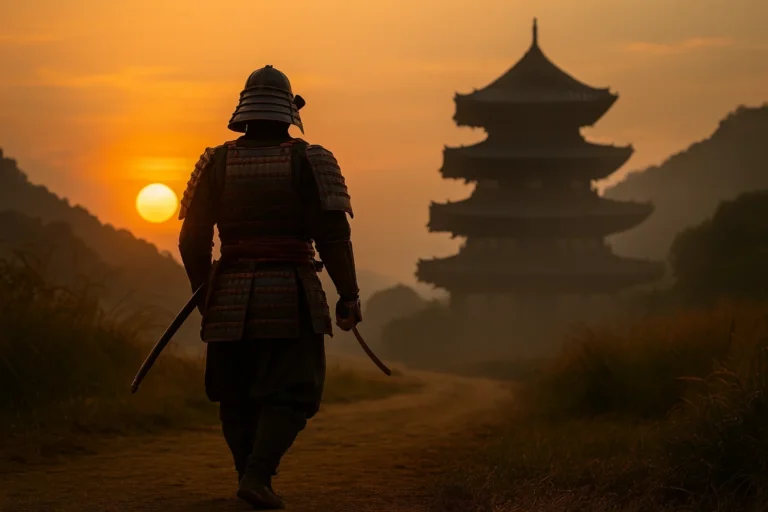
For centuries, the samurai class dominated Japan, embodying a strict code of honor and unmatched martial prowess. Their power wasn’t solely derived from skill with a blade, but also meticulously crafted fortifications. While many envision samurai in open battlefields, a critical element of their dominance lay in the strategic construction and occupation of castles – particularly those built on seemingly insurmountable mountaintops. These weren’t simply residences; they were complex, interconnected defensive systems designed for prolonged sieges, showcasing Japan’s unique architectural responses to warfare. This article explores the history, construction, and legacy of these legendary mountaintop strongholds.
The Rise of Samurai and Castle Building
The emergence of the samurai coincided with a period of increasing political decentralization in Japan, beginning in the Heian period (794-1185). As the central imperial court’s authority weakened, powerful regional clans rose to prominence, each vying for control of land and resources. This competition inevitably led to conflict, and the need for fortified positions became paramount. Initially, these fortifications were relatively simple – earthworks and wooden palisades built on natural features. However, as warfare evolved and clans grew in power, so too did the complexity and sophistication of their castles. The Genpei War (1180-1185), a pivotal conflict that led to the establishment of the Kamakura shogunate, saw increased castle construction as clans desperately tried to secure their territories. The Bushidō code, emphasizing loyalty, self-discipline, and martial skill, was inextricably linked to the defense and stewardship of these castles.
Why Mountaintops? The Strategic Advantages
Mountaintop locations were favored for several crucial reasons. First, and most obviously, they provided a significant defensive advantage. The steep slopes made direct assaults incredibly difficult, slowing down attackers and exposing them to defensive fire from above. Second, mountaintops often commanded expansive views of the surrounding terrain, allowing samurai to monitor enemy movements and anticipate attacks. Third, they were frequently located near important resources, such as water sources and forests, vital for sustaining a garrison during a siege. Finally, the sheer effort required to build and supply a castle on a mountaintop served as a powerful symbol of the clan’s wealth and determination, acting as a psychological deterrent to potential enemies. The time, resources, and manpower needed to *capture* such a castle were immense, making them unattractive targets unless absolutely necessary, as historian Stephen Turnbull details in ‘Samurai: The World of the Warrior‘ (https://www.amazon.com/Samurai-World-Warrior-Stephen-Turnbull/dp/0789498945).
Notable Mountaintop Strongholds
Takeda Castle (Hyōgo Prefecture)
Often lauded as Japan’s “Castle in the Sky,” Takeda Castle is a stunning example of a mountaintop fortress. Built in 1441, it’s remarkably well-preserved, primarily because it wasn’t destroyed during subsequent conflicts. Located on a 353.7-meter-high mountain, it appears to float above the clouds during certain atmospheric conditions – hence its nickname. Its construction utilized the natural terrain, making it a formidable defensive structure. A crucial element of its design was the strategic placement of gates and walls to maximize defensive chokepoints, documented in the archaeological surveys conducted by the Hyōgo Prefectural Education Committee (https://www.pref.hyogo.lg.jp/hyokyo/en/takedajo/history.html).
Fukui Castle (Fukui Prefecture)
Originally built in 1370, Fukui Castle underwent several expansions and modifications over the centuries. Situated on Mount Kannon, it commanded a strategic position overlooking the city of Fukui and the surrounding plains. A distinctive feature of Fukui Castle is its relatively flat mountaintop, allowing for the construction of a sprawling castle complex with multiple baileys and gates. During the Sengoku period, it was a key stronghold of the Shibata clan. The castle’s surviving structures, including several gates and walls, offer a compelling glimpse into its former grandeur. Information regarding the castle’s reconstruction and history can be found on the Fukui City website (https://www.fukui-kanko.org/en/spot/fukui-castle/).
Maruoka Castle (Ishikawa Prefecture)
Known as the “Castle of the Cranes” due to the numerous cranes that historically nested on its grounds, Maruoka Castle boasts one of the oldest existing castle keeps in Japan, dating back to the 16th century. Perched atop a small hill, the castle’s three-story keep is a striking landmark. Construction involved ingenious use of local stone, and the castle’s layout incorporates elements designed to channel attackers into carefully prepared kill zones. While not as dramatically situated as Takeda Castle, Maruoka Castle’s strategic location and robust defenses made it a prized possession for generations. The castle’s history and preservation are detailed by the Ishikawa Prefectural Government (https://www.ishikawa-kanko.jp/en/feature/maruokajo).
Odaka Castle (Aichi Prefecture)
Odaka Castle stands unique as it was built by the Matsudaira clan, who later became the Tokugawa Shogunate, providing a tangible link between a rising clan and its future imperial power. Nestled on a steep, forested mountainside, the castle highlights remarkable stone wall construction, adapted to the challenging topography. It held significant strategic value, guarding a key route into the Owari Plain, and served as a vital base during various conflicts. While much of the original structure is now in ruins, substantial portions of the stone walls remain, indicative of the castle’s initial strength. The Aichi Prefecture website provides extensive documentation on the castle’s history and archaeological findings (https://aichi-now.jp/en/spots/details/54/).
Architectural Features of Mountaintop Castles
While each castle had its unique characteristics, certain architectural features were common to all mountaintop strongholds. Stone walls (ishigaki) were essential, employed to reinforce natural slopes and create impassable barriers. These walls were often constructed using a technique called “cyclopean masonry,” involving large, unmortared stones fitted tightly together for maximum stability.Moats (hori) were frequently dug at the base of the mountain, further complicating any assault.Gates (mon) were heavily fortified, serving as critical chokepoints in the defensive system.Watchtowers (yagura) provided elevated positions for observation and defensive fire.Castle keeps (tenshu) were the central structures of the castle, serving as the residence of the lord and the last line of defense. The keep’s construction often utilized a complex framework of interlocking wooden beams, designed to withstand earthquakes and other natural disasters. A key innovation was the use of tiered defenses, meaning attackers had to overcome multiple layers of obstacles before reaching the keep. These techniques are extensively covered in the work of Edward Kidder, in ‘Japanese Castles’ (https://www.amazon.com/Japanese-Castles-Edward-S-Kidder/dp/0804813319).
The Decline of the Samurai and the Fate of the Castles
With the Meiji Restoration in 1868, the samurai class was officially abolished, marking the end of an era. Many castles, no longer deemed strategically important, fell into disrepair or were demolished entirely. The order to dismantle castles came from the new Meiji government, which viewed them as symbols of the feudal past and potential rallying points for rebellion. However, a significant number of mountaintop castles survived, either due to their remote locations, preservation efforts, or the sheer difficulty of complete demolition. Today, these castles stand as powerful reminders of Japan’s rich history and the enduring legacy of the samurai.
Conclusion
The mountaintop strongholds of the samurai represent a remarkable feat of engineering and strategic planning. These castles weren’t merely defensive structures; they were symbols of power, wealth, and the unwavering commitment of the samurai to their lords and their code of honor. Their enduring presence on the Japanese landscape continues to inspire awe and provides invaluable insights into a fascinating period of history. Exploring these castles allows us to connect with the past and appreciate the ingenuity and resilience of the samurai class.
FAQ
- Why were samurai castles built on mountaintops? Mountaintops offered significant defensive advantages, including steep slopes, commanding views, and access to resources.
- What are some of the key architectural features of samurai castles? Stone walls, moats, fortified gates, watchtowers, and strategically designed keeps were common features.
- What happened to the castles after the Meiji Restoration? Many castles were dismantled or fell into disrepair, but a significant number survived due to their location or preservation efforts.
- Are these castles open to the public? Yes, many of these castles are now popular tourist destinations, offering visitors a chance to explore their history and architecture.