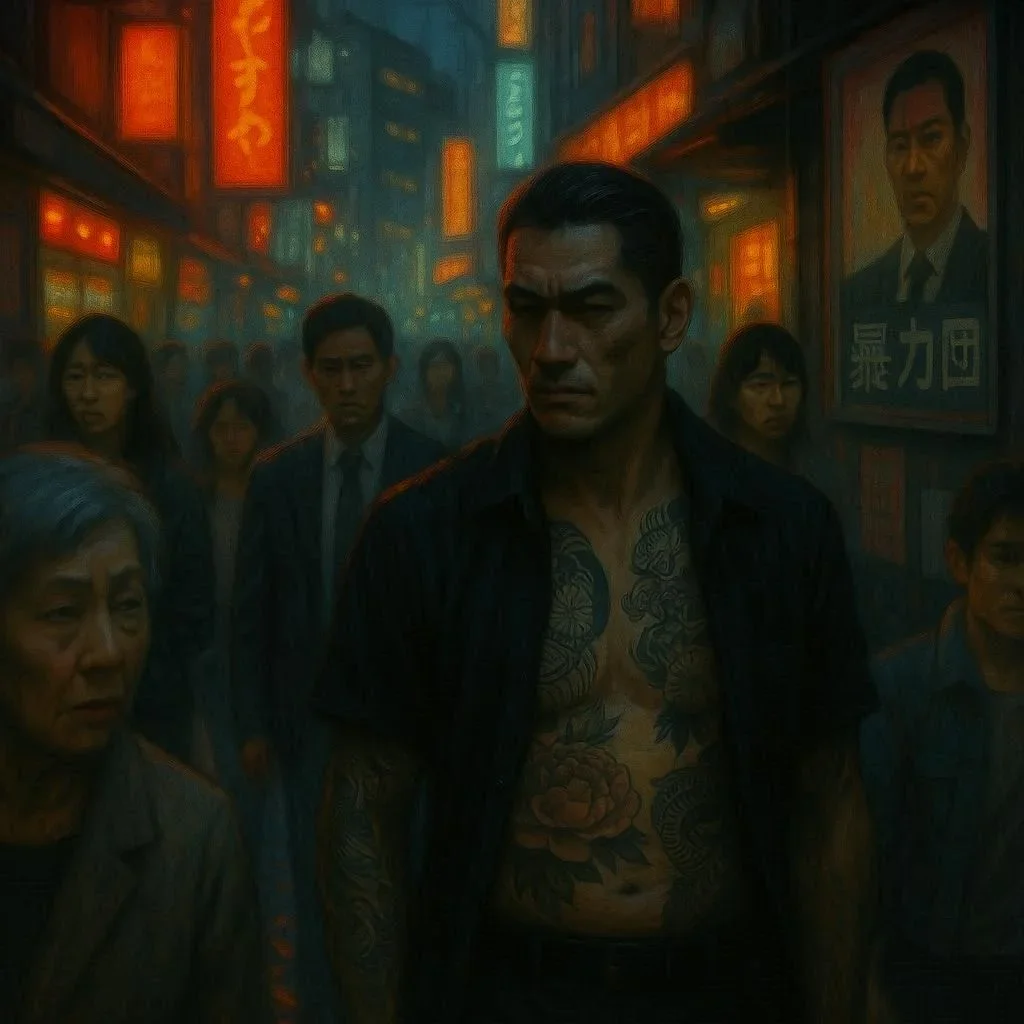
Yakuza have long been synonymous with Japan’s shadow economy, yet most readers only know them as present‑day organized crime figures. The transformation of Yakuza from small bandit gangs in Edo’s back alleys to the intricate syndicates of contemporary Japan reveals a story of social adaptation, state intervention, and cultural persistence. Understanding their medieval roots, the Tokugawa period consolidation, and the post‑war restructuring is key to appreciating how Yakuza survived Japan’s seismic political and economic shifts. Through this lens, we can trace the evolution of criminal enterprise against a backdrop of feudal obligation, centralized authority, and rapid modernization.
Origins of Yakuza in Feudal Japan
The earliest records of organized street crime date back to the Muromachi period (1336‑1573), but Yakuza’s ideological foundation emerged during the Edo era (1603‑1868). These groups—originally called “bakuto” or “fukurokuju” “loan sharks”—founded a loose code of honor that later crystallized into the Yakuza’s own code of “giri” (duty) and “ninjo” (humanity). While the Tokugawa shogunate sought to eliminate disorder, it paradoxically allowed certain “ninkyo” groups to operate as a buffer against outright anarchy. The shogunate’s 1705 edict that regulated clan loyalty and township governance created an administrative environment where these early gangsters could flourish as quasi‑law enforcement for local wooden villages.
Evolution During the Tokugawa Shogunate
Under Tokugawa rule, the shogunate sought to standardize tax collection and policing. To streamline bureaucratic control, it segmented criminal activity into six occupational categories: robbery, prostitution, gambling, money‑lending, street vendors, and “homurakawashi,” the rebellious harbored groups. Youthful merchants and former samurai, disenchanted by salary cuts and lingering feudal obligations, gravitated toward umbrella organizations that promised structured economic survival. Many Yakuza clans, or “kumi,” began adopting formal hierarchical systems reminiscent of feudal daimyo families, intertwining clan leadership with the shogunate’s sword‑and‑pen enforcement apparatus.
Transition Through the Meiji Restoration and Modernization
The Meiji Restoration (1868‑1912) carried sweeping reforms: the abolition of the feudal domain system, a new national police force, and an enforced push toward industrialization. These drivers drastically changed Yakuza dynamics. In response to policing crackdowns, Yakuza adapted by diversifying into legitimate businesses (insurance, construction, tourism) while maintaining illegal arms sales and extortion. Their transformation mirrored Japan’s broader transition—a time when yen replaced the shogunate’s kyūka system and railroads replaced dusty roads.
- State‑led policing reforms requiring registration of illegal guns led to a clandestine arms market.
- Urban migration to port cities (e.g., Yokohama, Kobe) created new laundering avenues through shipping and gambling dens.
- Rise of zaibatsu conglomerates exposed Yakuza to corporate partnerships for protection in noisy contract disputes.
- National civic education imposed gender norms that repurposed yakuza women as “cosmetics workers,” thereby expanding legitimate business fronts.
- Increased international trade offered Yakuza transnational drug corridors linking to Southeast Asia.
Post‑World War II Shifts and Contemporary Yakuza
Japan’s post‑war occupation and subsequent reconstruction altered the legal landscape for organized crime. The 1949 Penal Code revision explicitly criminalized Yakuza participation. Despite new legislation, Yakuza groups thrived in the economic boom (“Japanese economic miracle”) of the 1950s‑70s. By then, their smuggling networks and infiltration of the real‑estate sector made them powerful partners to white‑collar industries. Under the 1994 Anti‑Mafia Act, many Yakuza clans voluntarily disbanded or re‑branded as “kumi,” posing scrutiny from the Ministry of Justice (Moj) and the Public Security Intelligence Agency (PSIA). Nonetheless, they persist as a 300‑million‑yen monthly economy, infiltrating supermarkets, investment firms, and even the stock exchange.
The modern Yakuza retain a public image defined by ritualistic tattooing, strict loyalty rituals, and a code that venerates “honor” over legality—a paradox familiar to scholars of criminal sociology. Today’s Yakuza, however, contend with an increasingly digital economy; their adaptation has ranged from cyber‑crime expertise to participating in e‑commerce fraud schemes. Their enduring survival showcases the resilience of underground structures that intertwine history, culture, and economic opportunity.
Conclusion: The Yakuza’s Journey Matters Today
Tracing Yakuza’s metamorphosis from medieval street crews to modern syndicates underscores how historical context shapes criminal organizations. Understanding their evolution informs law‑enforcement strategies, community safety initiatives, and policy decisions. If you’re interested in how Japan’s legal frameworks, historical shifts, and corporate partnerships keep Yakuza relevant—or if you wish to protect your community from potential infiltration—visit the Ministry of Justice’s official website and review current anti‑Yakuza regulations. Stay informed, stay secure, and help shape a future where lawful commerce overrides clandestine networks. Investigate, learn, and act against Yakuza influence today.”
Frequently Asked Questions
Q1. What were the origins of the Yakuza during feudal Japan?
The Yakuza trace their lineage to the “bakuto” and “fukurokuju” loan sharks of the Muromachi period, who later evolved into the Edo era’s street gangs. Early codes of honor, “giri” and “ninjo,” became the foundation of their cultural ethos. These groups filled a quasi‑law‑enforcement role in rural villages while offering protection to local merchants and samurai. Trade, political upheaval, and societal shifts propelled their evolution into structured syndicates.
Q2. How did the Tokugawa shogunate influence Yakuza structure?
Tokugawa policy segregated criminal activity into six categories, encouraging Yakuza to appear as legitimate enterprises. Clans adopted hierarchical systems mirroring daimyo families. Their leaders aligned themselves with shogunate officials, ensuring protection and legitimacy. This arrangement embedded their influence deep within the social fabric.
Q3. What changes did the Meiji Restoration impose on Yakuza operations?
The abolition of feudal domains and the creation of a national police force disrupted traditional Yakuza networks. To remain viable, clans diversified into legitimate businesses such as construction and tourism. They also seized new opportunities via urban migration, gambling dens, and partnerships with zaibatsu conglomerates. In short, modernization forced Yakuza to blend legitimacy with illegal ventures.
Q4. How did post‑World War II reforms affect Yakuza activity?
The 1949 Penal Code explicitly criminalized Yakuza participation, curbing overt operations. However, the economic boom of the 1950s–70s provided fertile ground for smuggling and real‑estate infiltration. The 1994 Anti‑Mafia Act prompted many clans to rebrand, though a 300‑million‑yen economy persisted underground. Digital threats have emerged to replace older extortion methods.
Q5. Why does the Yakuza remain relevant in modern Japan?
The organization’s enduring code of honor, loyalty rituals, and tattoo culture create a strong internal bond. Their ability to adapt to new business models—from cyber‑crime to e‑commerce fraud—keeps them afloat. Yakuza also benefit from economic shadow pockets, infiltrating everyday sectors such as supermarkets, investment firms, and even the stock exchange. Policy, technology, and public perception all shape their continued influence.