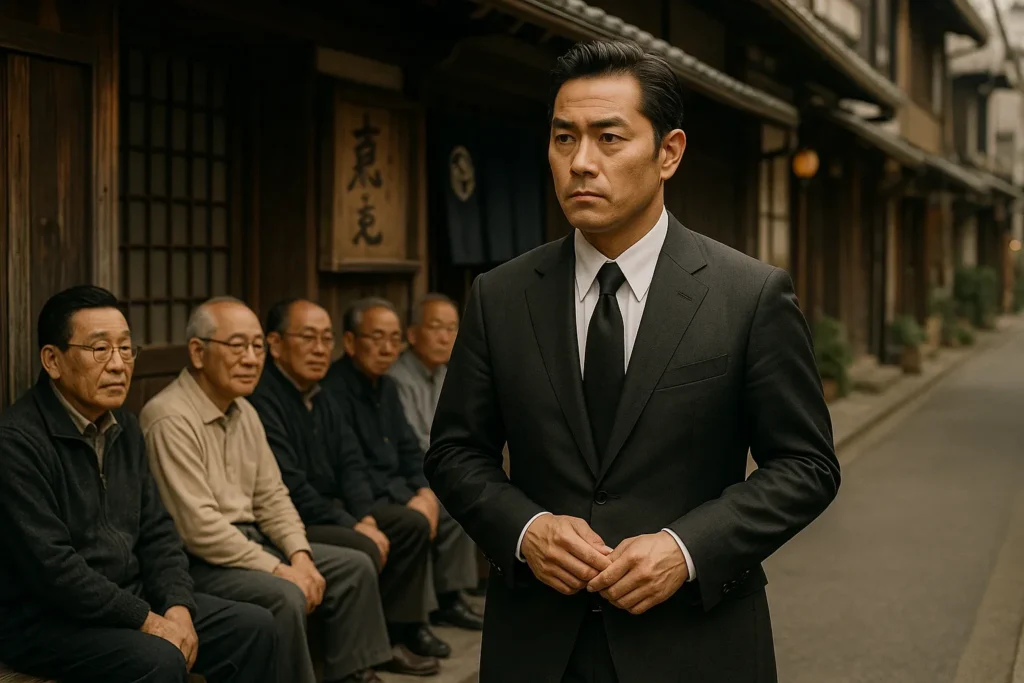
In the last century, the sociocultural fabric of Japan provided a fertile ground for the rise of the Yakuza, an organized crime syndicate that grew from a marginal group of street gamblers into a powerful, semi-legal network. Understanding how Yakuza growth unfolded requires a dive into Japan’s post‑war economic spikes, institutional tolerance, and deep‑rooted social hierarchies. The forces that allowed Yakuza growth were not accidental; they were the result of a confluence of policy decisions, cultural values, and economic shocks that shaped modern Japan.
Yakuza Growth and Postwar Economic Boom
After World II, Japan was an industrial desert. The Allied Occupation halted traditional industries, but also opened doors for rapid economic revitalization. The 1950s and 1960s, known as the “Japanese economic miracle”, created millions of jobs in heavy industry and electronics. Yet the surge also birthed a class of under‑employed, highly disciplined young men who found themselves without legitimate avenues for status and wealth.
The vacancy in official political and private sectors gave Yakuza members an attractive alternative. They capitalized on the country’s need for rapid infrastructure development—constructing highways, bridges, and rail lines—by offering “protection” and steering contracts. This symbiosis between government projects and criminal involvement became a cornerstone in Yakuza growth, as documented by the Yakuza Wikipedia entry, which notes the syndicate’s contract with the construction industry. The economic boom simultaneously amplified demand for security and influence, giving Yakuza growth a financial engine.
Yakuza Growth Through Civic Patronage Networks
Japanese society values hierarchical patronage, or *keiretsu*, a system of reciprocal business relationships that spans from local store owners to large conglomerates. Yakuza leaders harnessed this network by positioning themselves as patrons, providing small businesses with protection against rival groups and media scrutiny. On the one hand, local corporations benefited from the crime syndicate’s ability to suppress labor unrest. On the other, Yakuza affiliates enjoyed stable revenue streams and social legitimacy.
The emphasis on *giri* (debt of courtesy) endured even after the Occupation. Younger members of the Japanese workforce tied themselves to senior figures, and these mentorships produced a robust internal hierarchy. The culture of loyalty inherent in *amity,* or *yasōkyoku*, meant Yakuza growth could sustain itself through generational indoctrination, with each new generation replicating practices from the previous ones. External references such as Japan Culture site highlight how cultural ethics can shape corporate and criminal behavior alike.
Yakuza Growth and Traditional Social Hierarchy
Japan’s social structuring, couched in the concept of *mono no aware* (sensitivity to impermanence), creates a paradox: for some, strict boundaries offer a refuge, while for others they become a cage. Many young men belonging to *autonomous self‑entering businesses* such as ramen shops or convenience stores found that the traditional guild systems—known as *zaibatsu*—could no longer absorb their entrepreneurial ambitions. The Yakuza offered a new hierarchy: a domain where power was earned through loyalty and street-savvy, rather than birthright or familial estates.
Outside of Tokyo, rural communities experienced *boom and bust* cycles with the collapse of coal mining and agriculture. The Yakuza stepped in with investment diversification, a practice sanctioned by local *Chōshijō* (district association) leaders according to the Japan National Police Agency descriptions. That contribution turned Yakuza growth into a quasi‑economic stabilizer in many regions, reinforcing a perception that the syndicate was integral to community endurance.
Yakuza Growth Amid Limited Law Enforcement and Judicial Tolerance
For decades, the Japanese legal apparatus was tuned to stringently punish *non‑violent* crimes while focusing on *public order* infractions. Consequently, minor ideologies such as *factional bribery* were handled with non‑invasive “consultation” rather than prosecution. The *Company Law of 1949* enabled corporate structures that blurred the line between legitimate business and criminal activity. The distinction wasn’t wholly enforced; the Yakuza’s dual status as both criminal and social service provider allowed leaders to hold formal positions in *rakugaki*—literally “red‑colored” political parties.
The 1990s economic stagnation further tightened law enforcement ties. Police focused on white‑collar crimes linked to the “Lost Decade,” inadvertently creating a “law‑vacuum” where street gangs could expand. Over the last decade, reforms brought a constant, heavy-handed approach, but certain business sectors remain shielded by *emergency ordinances*, a fact reflected in Japan Policy Index publications on crime statistics. This environment contributed directly to Yakuza growth by making law‑enforcement practices predictable and less likely to crack down heavily on “grey‑area” operations.
Key Factors Driving Yakuza Growth
- Post‑war industrialization created a market for Yakuza protection and expertise.
- Cultural parity with *keiretsu* and *giri* meant patronage could anchor criminal networks.
- Regional economic gaps allowed Yakuza to fill voids in communities marginalised by rural decline.
- Legal asymmetry designated non‑violent organized crime as “social problem” rather than crime.
- High social tolerance for informal arrangements sustained clandestine income streams.
How Yakuza Growth Shapes Japan’s Future
Fast‑forward to today, Yakuza growth is still evident in ventures from construction to cyber‑crime, painting a picture of an organization twice separated from the legal system yet still wedded to it. While the Japanese government has spearheaded tougher laws such as the “Anti-Yakuza Act,” the cultural underpinnings that allowed growth—social loyalty, mutual aid, and a fragile economic patchwork—remain. The new generation of policymakers must balance enforcement with inclusive economic development, ensuring that the systemic gaps which once nurtured Yakuza growth are closed with sustainable alternatives.
Take Action: Engage with Community Job Initiatives
Yakuza growth highlights how social marginalisation can fuel crime. To help mitigate future underground networks, local governments and NGOs should invest in community‑based employment—especially for students and rural youth—and create transparent avenues to legitimate enterprise. Become part of the solution by volunteering in job‑training programs, supporting local businesses, or advocating for stronger anti‑corruption regulations. Together, we can recreate an environment where no one feels the need to turn to organized crime. For more information, visit United Nations Economic Development Resources and Britannica’s Yakuza Overview.
Ready to make a difference? Contact your local council today to support community job initiatives and help seal the cycle of Yakuza growth once and for all.
Frequently Asked Questions
Q1. What main factors triggered Yakuza growth after World II?
The rapid economic expansion of post‑war Japan left many young men unemployed and hungry for status. Yakuza groups stepped into a legal void, offering protection and facilitating construction contracts. Coupled with cultural concepts such as *keiretsu* and *giri*, they were able to integrate into mainstream business networks, solidifying their influence.
Q2. How did Yakuza involvement affect the construction industry?
During the Japanese economic miracle, Yakuza members positioned themselves as intermediaries, ensuring “protection” and streamlining bid processes for infrastructure projects. Their presence reduced labor disputes and increased project completion rates, albeit at the cost of corruption and inflated costs for the public.
Q3. What role did cultural values like *keiretsu* and *giri* play in Yakuza expansion?
These values emphasize loyalty, patronage, and reciprocal obligations. Yakuza adopted these norms to legitimize their operations, acting as providers of social security, which reinforce trust and cohesion among members and clients alike.
Q4. Why did rural communities sometimes see a rise in Yakuza activity?
After the decline of coal mining and agriculture, local economies suffered severe downturns. Yakuza filled the void by investing diversely, offering employment opportunities while maintaining a quasi‑stabilization role that many saw as a necessary evil.
Q5. How are current Japanese laws addressing Yakuza growth?
The Anti‑Yakuza Act and related regulations target associates, outlaw advertisers, and impose strict licensing for organizations with known ties. However, enforcement remains uneven, and cultural economic gaps still provide grey areas for underground operations.